OpenAI's First Hardware Is a $230 Macro Pad for Bossing Around Codex Agents
TL;DR
OpenAI just shipped its first piece of physical hardware, and it is not the Jony Ive smart speaker everyone is waiting on. It is a $230 macro pad. Built with boutique keyboard maker Work Louder, the Codex Micro is a small control deck for OpenAI's Codex coding agent: 13 keys, a dial, and a joystick, with six frosted "agent keys" that light up to show what each of your running agents is doing. It is a bet that once you are supervising a fleet of coding agents instead of typing the code yourself, you want a physical dashboard for them. Whether that is a real insight or a very expensive status light is the fun part.
What OpenAI actually shipped
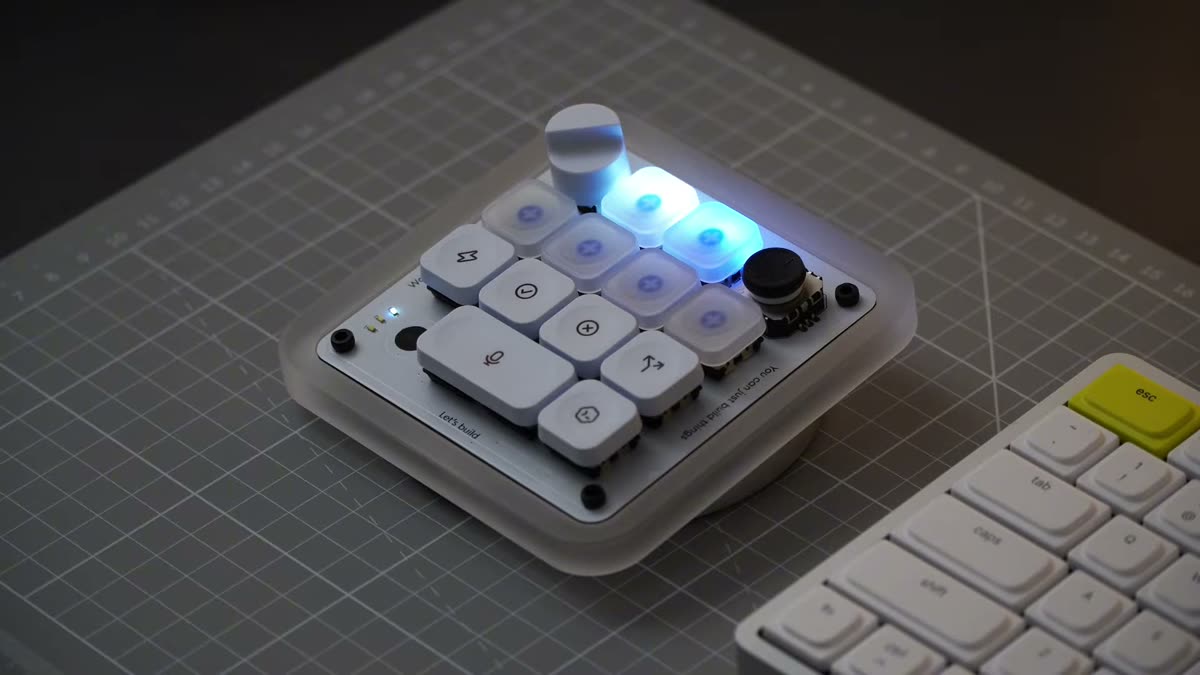
The facts are small and the framing is large. This is the first product OpenAI has ever sold as hardware, it costs $230, and it is a limited run that Work Louder says is available "only until it runs out." Physically it is Work Louder's Creator Micro 2 chassis rebadged for OpenAI: 13 mechanical keys, one rotary encoder (the dial), one joystick, and configurable layers. A companion app called Input maps every key.
OpenAI's own line is that it is "designed to supercharge people's Codex usage," and the target is the most engaged slice of the 5 million-plus weekly Codex users, specifically the ones juggling several parallel agent runs. That last detail is the whole reason the thing exists.
The interesting part: your agents get status lights
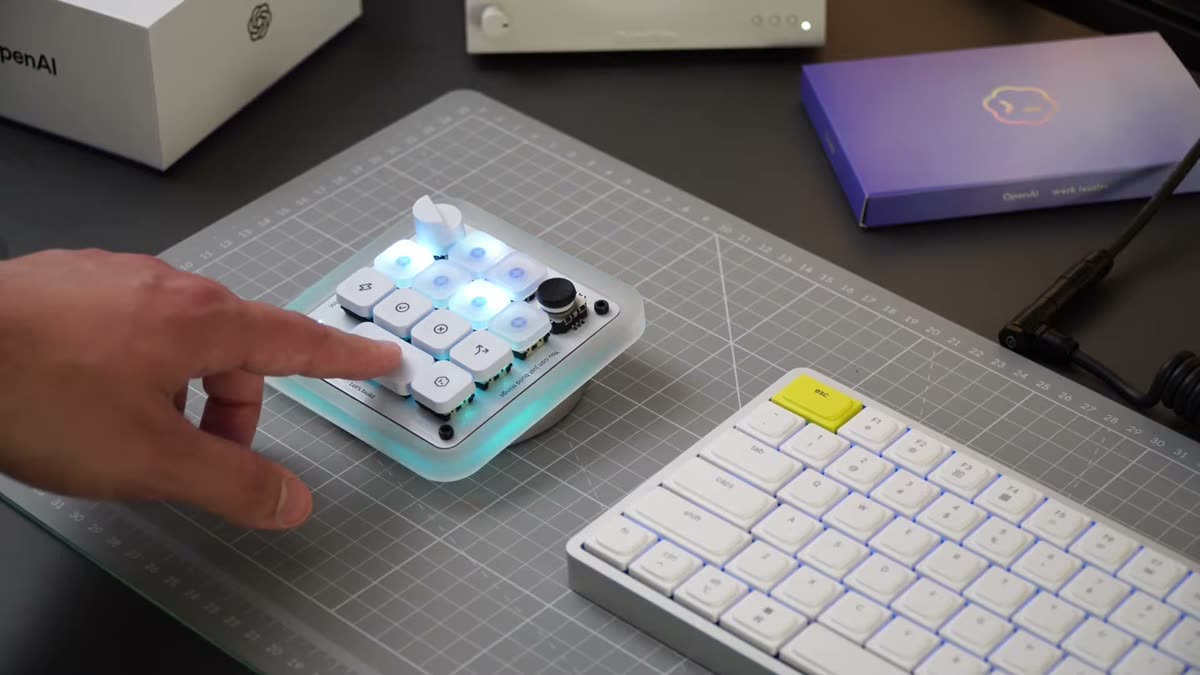
Ignore the keycaps for a second. The six frosted keys are the actual idea. Each one can be bound to a Codex thread, and it glows with that thread's live state. No clicking, no refreshing, just a color.
This is the ambient-status trick that teams have leaned on for years. Think of the build light bolted to an office wall that flips red the moment CI breaks, or a nurse's station where one glance tells you which room needs a human. The Codex Micro shrinks that idea down to six keys on your desk, one per agent, so "which of my five agents is stuck?" becomes a color you catch in your peripheral vision instead of five browser tabs you have to click through one by one.
When agents ran one at a time in your terminal, you did not need this. When you run a fleet of them asynchronously, the bottleneck stops being how fast you write code and becomes how fast you notice which agent needs you, right now. That is a genuine problem, and a glanceable light is a genuine answer to it.
The controls: a dial for thinking, a joystick for jobs
The rest of the deck is about acting on what those lights tell you, without reaching for the mouse:
- Command keys give your most-used moves a dedicated button: accept, reject, start a new chat, branch a thread, and push-to-talk. These are the things you do to an agent's output all day, now tactile instead of buried in a UI.
- The dial (a rotary encoder) turns the reasoning effort up or down on the fly, so you can spend a bigger thinking budget on a genuinely hard task and dial it back down for a rename.
- The joystick flicks to launch a common Codex workflow: review a PR, debug an error, or refactor a file. It doubles as the push-to-talk control.
Why a physical device, and why now
Step back and the strangeness is the point: a software company just shipped a keyboard accessory. The timing is a tell. The Codex Micro lands ahead of the rumored Jony Ive smart speaker, which means it doubles as a low-stakes way for OpenAI to put a branded object on developers' desks and to learn something about making and shipping hardware before the big swing. Selling a $230 limited-run collectible to the most engaged corner of a 5 million-user base is at least as much a brand move as a product one.
And then there is the case, which is engraved "You can just build things." That is either genuinely earnest or the most on-brand thing OpenAI has ever laser-etched into aluminum, and honestly it can be both.
Should you buy one
Straight talk: underneath the branding, this is a programmable macro pad, a product category that has existed for years. You can flash a QMK board to fire accept and reject hotkeys for roughly a third of the price, minus the live thread-status RGB and the logo. What the $230 actually buys is the tight Codex binding, keys that know your thread state, plus the object itself.
So the honest split is this. If you really do run many agents in parallel and lose the thread on what each is doing, the ambient-status idea might earn its keep on your desk. If you run one agent in one terminal, it is a $230 desk toy with a good story. Both of those can be true at the same time.
The bigger signal is worth sitting with regardless of whether you buy: the input device for programming is quietly being redesigned around supervising agents rather than typing characters. Maybe the winning form factor turns out to be a macro pad, maybe a phone notification, maybe something nobody has built yet. But OpenAI is now openly iterating on the hardware of the agent-boss era, and this is the first data point.
Key Takeaways
- OpenAI's first hardware: the Codex Micro is the first product OpenAI has ever sold as physical hardware, built with Work Louder, at $230 in a limited run.
- It is a control deck for Codex: 13 keys, a dial, and a joystick, mapped to agent actions through a companion app called Input.
- Six agent keys are status lights: frosted keys glow white, blue, green, amber, or red for idle, thinking, complete, input-needed, and error across your Codex threads.
- Dial and joystick: the dial changes reasoning effort on the fly; the joystick launches workflows like PR review, debugging, or refactors.
- The real thesis: it is a bet that once you supervise fleets of agents, you want glanceable, tactile control instead of another browser tab.
- Underneath it is a macro pad: a DIY QMK board covers the hotkeys for less, so you are paying for the Codex integration and the badge.
Sources: Axios, Engadget, The Next Web, Work Louder, AI Weekly