Adobe Forecasts 130% Growth in AI Traffic to US Retailers This Holiday, Down From 693%
TL;DR
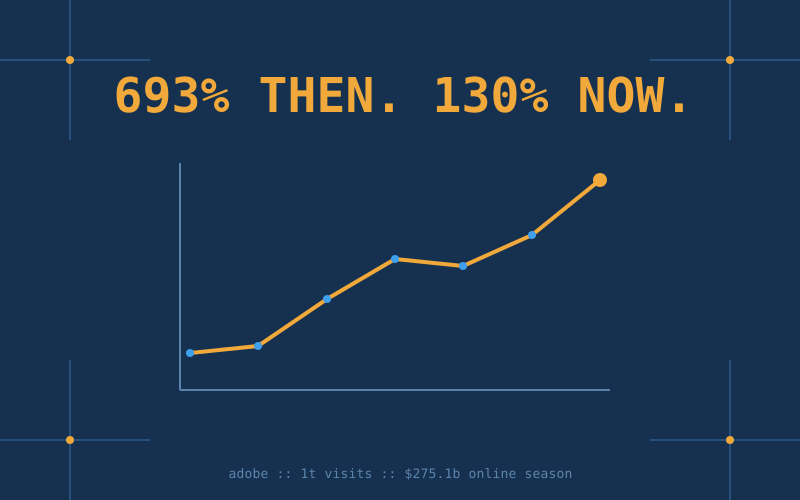
Adobe's 2026 holiday forecast says traffic from generative AI tools to US retail sites will grow 130% year over year between November 1 and December 31. That is a steep drop in the growth rate from the 693.4% Adobe measured for the 2025 season, and it is exactly what a channel looks like when it stops being a curiosity and starts being a habit. Total US online spend is forecast at a record $275.1 billion, up 6.7%. If you sell anything online, AI assistants are now a referral source you plan around, not a line item you watch for fun.
What Adobe published
The forecast, released September 28, is built on Adobe Analytics data covering more than 1 trillion visits to US retail sites, 100 million SKUs, and 18 product categories. That is transaction and visit telemetry from retailers' own sites, not a panel of people guessing what they will do in December.
The AI numbers, all year-over-year growth in traffic from generative AI tools to US retail sites:
- Full season (Nov 1 to Dec 31): up 130%
- Thanksgiving: up 159%
- Black Friday: up 95%
- Cyber Monday: up 88%
The money around it: Cyber Monday (November 30) is forecast at $15.1 billion, up 6.2%, Black Friday at $12.9 billion, up 9.2%, and Thanksgiving at $6.9 billion, up 8.5%. The five days of Cyber Week together land at $47.5 billion.
The number that shrank is the interesting one
Last season, per Adobe's January 2026 recap, traffic to retail sites from generative AI tools rose 693.4% year over year, and AI-driven traffic on Cyber Monday rose 670%. Adobe noted at the time that "the base of users remains modest." This year's forecast for Cyber Monday is 88%.
That is not the channel dying. It is arithmetic. Growing 693% means ending the year at roughly 7.9 times where you started; growing 130% on top of that means roughly 2.3 times an already much larger base. Think of it like a new coffee shop: going from 10 customers to 80 is a headline, going from 80 to 184 is a business.
The quality of that traffic is why it matters more than its size. Adobe's 2025 data, as reported by Digital Commerce 360, showed shoppers arriving from AI referrals converting 31% more than visitors from other traffic sources, with revenue per visit from AI referrals up 254% year over year. A visitor who already asked a chatbot to compare three options shows up having done the homework.
What shoppers are asking AI to do now
Bloomberg's report on the forecast quotes Vivek Pandya, director of digital insights at Adobe, describing the change:
"Consumers are getting much more comfortable having dialogues with an agent, getting recommendations and going to the retail site from those conversations."
He also said shoppers are "going beyond big-ticket items to everyday essentials." A year ago the AI shopping use case was "which TV should I buy." Now people are apparently asking it about dish soap, which is either a triumph of agentic commerce or a cry for help.
The rest of Adobe's release lines up with that. Adobe expects clothing basics to rise 210% and personal hygiene 150% during Cyber Week against a September baseline. Bloomberg's report adds that purchases actually completed by AI agents remain minimal: the agent does the research, and a human still clicks buy on the retailer's site.
Adobe paired the traffic data with a July 2026 survey of 5,000 US consumers. Of those who had used AI for online shopping, 77% said it made them more confident in the purchase and 69% said they were less likely to return the item. Treat those as self-reported, but the return figure is the one a merchant's finance team will circle.
Where the rest of the traffic comes from
Adobe called the AI user base "modest" as recently as January. For the channels that carry most of the revenue, Adobe forecasts growth in revenue share, not traffic, so these numbers do not compare directly with the 130%.
Inside affiliates, Adobe says cashback and rewards sites drive 36% of that revenue and influencers and creators 22%. Put that next to the AI numbers and the picture is consistent: discovery is moving away from the search results page toward conversations, whether with a chatbot or with a creator.
What to do with this if you sell online
Make your product pages readable by machines
If an assistant cannot parse your price, stock status, shipping terms, and specs, it cannot recommend you, and the 31% conversion edge goes to a competitor whose page it can read. Structured product data, clean server-rendered HTML, and plain-language specs are now distribution work, not SEO hygiene.
Measure AI referrals as their own channel
Split AI assistant referrers out in your analytics before November, not after. You want your own conversion rate and revenue per visit for that segment, not Adobe's average, because it tells you whether to spend on the channel or ignore it.
Do not plan around agents completing checkout yet
Completed agent purchases are still minimal, per Bloomberg's report, and some large retailers, Amazon among them, block certain AI assistants outright. For this season, the win is being the site the assistant sends people to, not building a checkout flow for a bot.
Caveats
- These are forecasts, not measured results. Adobe will publish actuals in January.
- Adobe does not publish the absolute size of AI referral traffic in this release, only growth rates, so the 130% has no denominator you can check.
- The 31% conversion and 254% revenue-per-visit figures are from the 2025 season; Adobe's 2026 forecast release does not update them.
- The 77% and 69% figures are self-reported survey answers, not observed behavior.
Key Takeaways
- Adobe forecasts AI traffic to US retail sites will grow 130% year over year this holiday season, down from 693.4% growth measured in 2025.
- The slowdown reflects a much larger base: AI shopping referrals are moving from novelty to routine, including for everyday essentials.
- AI referrals were the highest-intent traffic Adobe tracked last season, converting 31% more than other sources.
- Total US online holiday spend is forecast at a record $275.1 billion, up 6.7%, with Cyber Monday at $15.1 billion.
- Paid search revenue share grows only 4% while social grows 17%, so discovery keeps moving off the search results page.
- For merchants: make product data machine-readable and track AI referrals as a separate channel now.
Sources: Adobe: U.S. Holiday Shopping Season to Hit Record $275.1 Billion Online, Adobe: 2025 Holiday Shopping Season recap, Bloomberg via The Spokesman-Review, Bloomberg, Digital Commerce 360