Claude's Agent Now Works While Your Laptop Is Off. Only 8.7% of It Writes Code.
TL;DR
On July 7, Anthropic brought Claude Cowork, its multi-step task agent, to web and mobile, and flipped on the part that actually matters: sessions now run server-side. You can hand Cowork a job, close your laptop, and it keeps going, pinging your phone only when it hits a decision you have to make. The reveal buried in the launch is a usage stat. Across 1.2 million Cowork sessions from more than 600,000 organizations, only 8.7% of the work was software development. The coding agent barely codes.
What actually changed
Cowork is not new. It launched in January as a desktop-only agent that ran on your machine while the app was open. The July 7 update does two things. It puts Cowork on the web, from the Claude home screen, and on iOS and Android, and it moves execution off your device. Beta access is rolling out to Max subscribers first, with other plans to follow over the next several weeks.
The device part is the real shift. Until now, "agent" mostly meant a synchronous session: you sat there, watched it work, and if you closed the lid it stopped. Cowork sessions now persist in Anthropic's cloud, and scheduled tasks run with no device online at all. Set Monday's client prep for 6am and Claude works through the email threads, transcripts, and recent news, builds the briefing doc, and leaves the follow-up email drafted but unsent, before you have had coffee.
The number that reframes it
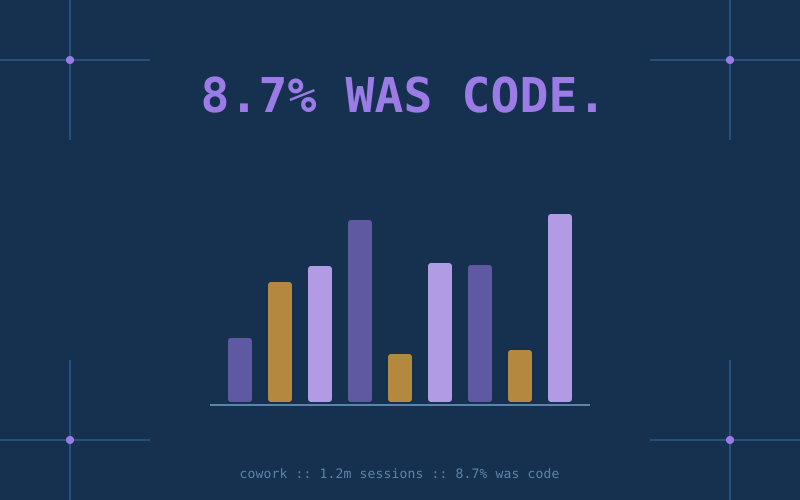
Anthropic looked at 1.2 million anonymized Cowork sessions from over 600,000 organizations (May data) and published the breakdown. Business process automation, the reports-checklists-spreadsheets grind, was 33.4%. Content creation and copywriting was 16.4%. Software development, the thing "coding agents" are named after, was 8.7%.
Sit with that split for a second. The tool grew out of Claude Code, the agent that writes and ships software, and yet more than 90% of what people do with Cowork is not code. A coding agent that mostly does not code is either an identity crisis or a market signal. Anthropic is betting it is the second one.
How the server-side agent works
Here is the mechanic that makes the mobile story more than a smaller screen. When you start a Cowork task, the work does not live on your laptop; it lives in a session on Anthropic's servers. Think of it as handing a job to an assistant who keeps working after you have left the office, and texts you only when something needs your signature. You close the laptop, walk into a meeting, and the assistant keeps going. When it reaches a call only you can make, publish this, send that, it fires a notification to your phone and waits. Nothing goes out without your explicit approval, and you can redirect a draft mid-task if it is heading the wrong way.
Why Anthropic cares about your phone
Anthropic put the strategy in one line: success "will depend less on who has the best chatbot and more on who owns the space where work gets done." Translation: the chatbot is a commodity now, and the prize is being the surface where the actual work happens, the inbox, the deck, the spreadsheet, the renewals tracker with the risks flagged. OpenAI is making the same move, pushing its Codex agent out of pure software work into reports, spreadsheets, presentations, and research. Anthropic also wired Claude into Slack with Claude Tag. Everyone is racing to leave the chat window.
What it means if you build
Two things to steal. First, async is the new default for agents, and it changes the UX you owe your users. If your agent can run for twenty minutes server-side, you need an approval-and-notification loop, not a spinner. The interesting design problem is no longer "how do I stream tokens" but "how do I interrupt a human at exactly the right moment, and no other one."
Second, the 8.7% is a signpost. The unglamorous knowledge-work jobs, reconciling the quarter's spend and drafting the variance memo, turning a folder of contracts into a renewals tracker, building tomorrow's deck from call transcripts and pipeline data, are what people actually reach for. If you are building agent products, the demand is sitting in the boring documents, not the clever code. The market has been telling you this; Anthropic just put a percentage on it.
The honest caveats
Straighten a few things before you rearrange your workflow around it. This is a beta, rolling out to Max users first over several weeks, so "available" does not mean available to you today. The usage numbers are Anthropic's own, drawn from its own product and reported by the company selling the agent, so treat the 8.7% as a directional signal rather than an audited fact. And server-side execution is a genuine trust ask: you are letting an agent run through your email, calendar, and files while your laptop is shut, which is convenient right up until it is not. The approval gate is the safety rail, and it only works if you actually read what you are approving. Anthropic doubled Cowork usage limits through August 5 to encourage bigger tasks, which makes this a fine window to test how far you trust it, on something reversible.
Key Takeaways
- On July 7, Anthropic brought Claude Cowork to web and mobile and moved session execution server-side; scheduled tasks now run with no device online. Beta starts with Max subscribers.
- Across 1.2 million sessions from more than 600,000 organizations, only 8.7% of Cowork work was software development. Business process automation (33.4%) and content plus copywriting (16.4%) led.
- Agents now run asynchronously: start a task, close the laptop, and Claude pings your phone for approvals. Nothing publishes without your explicit sign-off.
- The strategy is owning "the space where work gets done," not the chatbot. OpenAI's Codex and Claude Tag for Slack are the same bet from different angles.
- For builders: design for async approval loops instead of spinners, and aim at the boring knowledge-work documents where the real demand is.
- Caveats: it is a beta, the usage stats are Anthropic's own, and running an agent server-side against your inbox and files is a real trust decision. Usage limits are doubled through August 5.
Sources: Anthropic (Claude Cowork on web and mobile, the primary announcement), TechCrunch (usage breakdown across 1.2M sessions), Help Net Security (background sessions, Max rollout, doubled limits)