Wesleyan Tracks $137M on 220 AI-Generated Midterm Ads, Only 27% Carry a Disclaimer
TL;DR
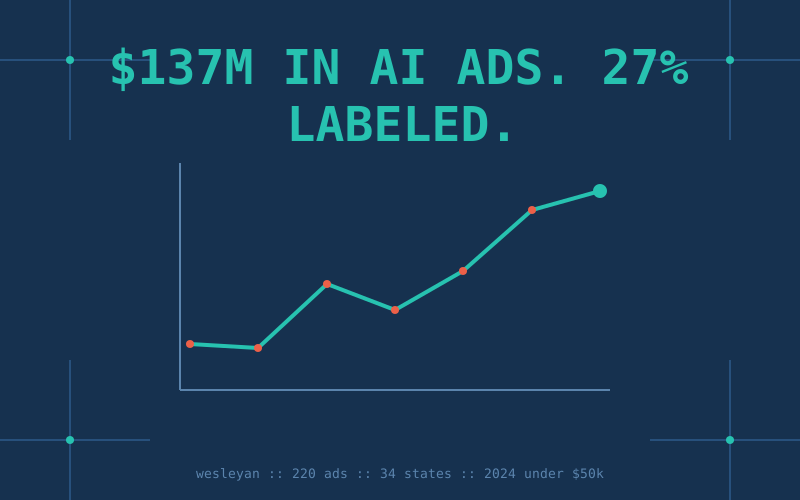
The Wesleyan Media Project published its latest count of AI in the 2026 midterms on October 15: 220 political ads generated or enhanced with AI, more than $137 million in spending behind them, and ads in 34 states. The 2024 cycle, by the same method, had under $50,000. Only 27% of the ads say they used AI, down from 48% in May. Republican candidates and groups sponsored 81% of the ads and 88% of the money. The New York Times built a feature on the data on October 16, and that story's examples, from a fake "political delusion pill" commercial to a Hollywood ad maker who says AI cut a $2 million spot to $200,000, are the texture around the numbers below.
The count, and how it moved
Wesleyan has tracked political advertising since 2010 and started coding AI use this cycle. Its first report in May found 33 unique ads and at least $19.7 million behind them. The September 4 update had a minimum of 164 ads and just under $80 million. The October 15 release puts it at 220 ads and more than $137 million, with the vote on November 3 still two and a half weeks out when the data closed.
The money figure is AdImpact's estimate for each ad, so it is the cost of airing and promoting the ads, not of making them. The ads run across broadcast TV, connected TV and digital.
Who gets counted
The method is what makes the undercount claim credible. An ad goes in the database if it carries an explicit AI disclaimer, if news media or AdImpact reported that it used AI, or if Wesleyan's coding staff flagged it and the team confirmed it. When coders were unsure, the ad was left out. That is like estimating speeding by counting the drivers who confess, the ones a reporter happened to clock, and the ones so obvious the whole highway noticed. The quiet ones never make the list, which is exactly the population a disclosure rule is meant to reach.
Co-director Erika Franklin Fowler put it in one line in the release: "Much of the AI use is not disclosed through any type of disclaimer." The disclosure number has gone the wrong way with each update.
There is no federal labeling rule. Public Citizen counted Maryland as the 30th state with an election deepfake law in May, and the Times reports 30 states now require some disclosure of AI in political ads. Those laws mostly cover "materially deceptive" depictions of candidates rather than every synthetic frame, and the project's authors wrote in October that ads in states without such a law disclosed at 32%, against 29% in states with one.
The partisan split
In the October data, Republican candidates or groups sponsored 81% of the ads, Democrats 12%, and independents or issue groups the rest. By spending, Republican-affiliated sponsors account for 88%. In May the split was 70% to 18%, so the gap has widened as the volume grew. Co-director Travis Ridout's explanation to the Times is that Democratic candidates face "more reputational risk when using a tool that they are arguing should be regulated."
What the ads do
The Times piece, which Gizmodo and Yahoo News summarized, is where the numbers get faces. The campaign of Bruce Blakeman, the Republican running for New York governor, has posted at least 22 AI-generated attack ads since April, and few of them disclose it. One shows Mayor Zohran Mamdani and Governor Kathy Hochul gardening together and pitching a fictional "political delusion pill," voices and likenesses included, no label. The state Democratic Party filed a complaint with the Board of Elections in August under New York's law on materially deceptive political communications. Blakeman's campaign told a local ABC affiliate the ad was satire and needed no disclosure, which is a legal theory that a lot of other campaigns will be watching closely.
In Oklahoma, a group called Make Oklahoma Great Again ran an AI image of the Democratic gubernatorial candidate embracing Hillary Clinton under the text "Clinton Lover," and AdImpact tracked more than $200,000 of Oklahoma TV time behind it. A clip shows Michigan Senate candidate Abdul El-Sayed laughing at cards reading "Death to America." A Florida GOP primary ad put James Fishback at a table with Representative Ilhan Omar and Iranian leaders. Nearly half of the tracked AI ads, per Gizmodo's read of the data, include deepfake depictions of real politicians.
Not all of it is deception. Some campaigns animate a still photo (Oklahoma's Chip Keaton as a young state trooper, tilting his head and smiling), generate crowd scenes, or replace stock footage. And Texas Democrat James Talarico ran an ad that ends on "Made by humans. Not A.I.", which may be the first political spot in history where the disclaimer is the pitch.
The economics underneath
The number that explains the other numbers came from Fred N. Davis III, the Hollywood political ad maker who founded Strategic Perception. He told the Times a commercial that would have cost nearly $2 million to shoot can now be made for about $200,000 with AI, and he calls this "the year of the A.I. election." Whether you find that exciting or alarming, it is the mechanism: a 90% production discount on the most expensive kind of persuasion media, arriving in a cycle where the rules are a 30-state patchwork.
Our September look at FEC filings found campaigns had itemized only a few thousand dollars to ElevenLabs and Midjourney since 2020. The two datasets fit together: the FEC sees a campaign paying its ad agency, and the agency's generative tooling never appears on a Schedule B. Wesleyan measures the output side, which is where the $137 million lives.
Why a builder should care
If you ship generative video or voice tooling, political consultants are now a customer segment with real budgets, and 30 states attach disclosure duties to what they produce. Michigan, for one, spells out a three-second voiceover and a four-second written disclosure. Baking a label option into the export path is cheaper than fielding the subpoena later, and a provenance stamp like C2PA is a small addition to the same path. On the other side, Wesleyan's method shows how thin detection still is: human coders plus news clippings plus self-labels. A detector that could re-score this corpus independently would be useful to every newsroom in the country before November 3.
The consultants' trade group wants narrower rules. Julie Sweet of the American Association of Political Consultants told the Times disclaimers do not help viewers tell real footage from synthetic, and the group wants a federal rule that overrides state laws, labels only "deceptive" content, and protects political speech broadly. Bruce Schneier's framing in the same piece is the one most engineers will land on: the problem is undisclosed deception, not the tool.
Caveats
All three Wesleyan counts are floors. The project itself says the totals are "likely an undercount because AI use is hard to detect," and it excluded any ad its coders could not confirm. Spending is AdImpact's estimate, not audited invoices. The Times, working from the dataset, reported 31% disclosure, which matches Wesleyan's September figure rather than October's 27%, so the two numbers describe different cuts of the same data, not a contradiction. The partisan split describes who sponsored the tracked ads, and the method's reliance on news coverage and disclaimers could shape which ads get found. The $2 million to $200,000 figure is one ad maker's estimate of his own work, not a survey.
Key Takeaways
- Wesleyan's October 15 release counts 220 AI-generated or AI-enhanced midterm ads with more than $137 million in spending, across 34 states, versus under $50,000 for all of 2024.
- Disclosure is falling as volume rises: 48% of tracked ads carried an AI label in May, 31% in September and 27% in October, with no federal rule and a 30-state patchwork of laws.
- Republican sponsors account for 81% of the ads and 88% of the spending; Wesleyan's co-director attributes the gap partly to Democrats' reputational risk from using a tool they want regulated.
- The driver is cost: one veteran ad maker says a spot that would have cost nearly $2 million can be made for about $200,000 with AI.
- Every count is a floor: the method only admits ads that self-label, get reported, or are obvious enough for coders to confirm.
- For tool builders, political video is now a paying segment with disclosure duties attached; a label and provenance stamp in the export path is the cheap version of compliance.
Sources: Wesleyan Media Project, October 15 release, Wesleyan Media Project, September 4 release, Wesleyan Media Project, May 28 release, Gizmodo, Yahoo News, Public Citizen